
Understanding Periodic Limb Movement
PLM is a neurological sleep disorder where your legs—and sometimes arms—move involuntarily and repeatedly during sleep. These movements usually happen every 20 to 40 seconds and can last for minutes or even hours throughout the night.
Unlike restless legs syndrome (RLS), which causes discomfort before sleep and involves a conscious urge to move, PLM happens while you’re asleep, often without you knowing.
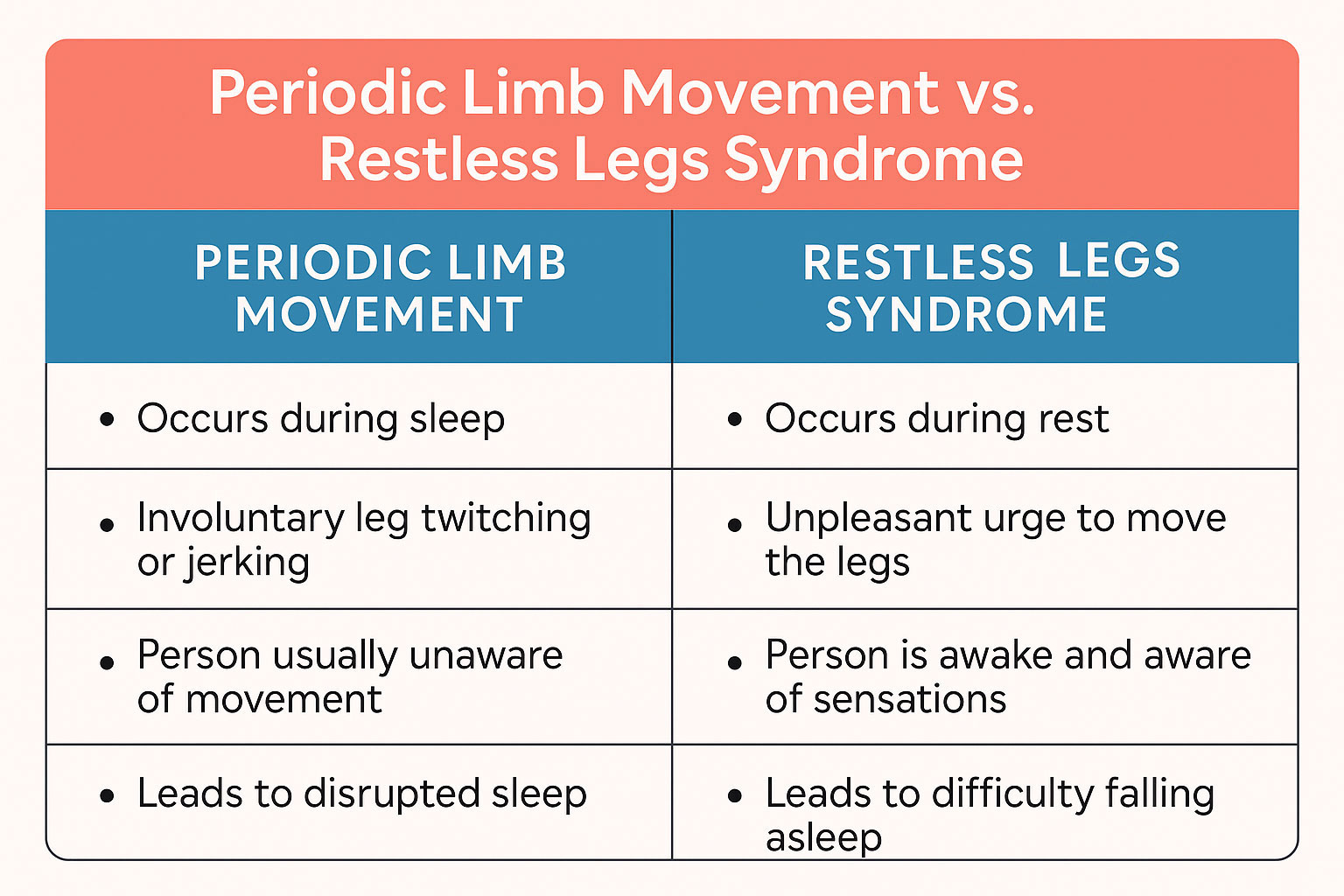
Could PLM Be Disrupting Your Sleep?
- Repetitive leg or foot twitching during sleep
- Feeling tired despite a full night in bed
- Frequent nighttime awakenings
- Difficulty falling back asleep after waking
- Poor concentration or memory during the day
- Bed partner reports jerky leg movements
- Unexplained insomnia or sleep maintenance issues
Note: PLM may occur on its own or alongside other sleep conditions like restless legs syndrome or sleep apnea.
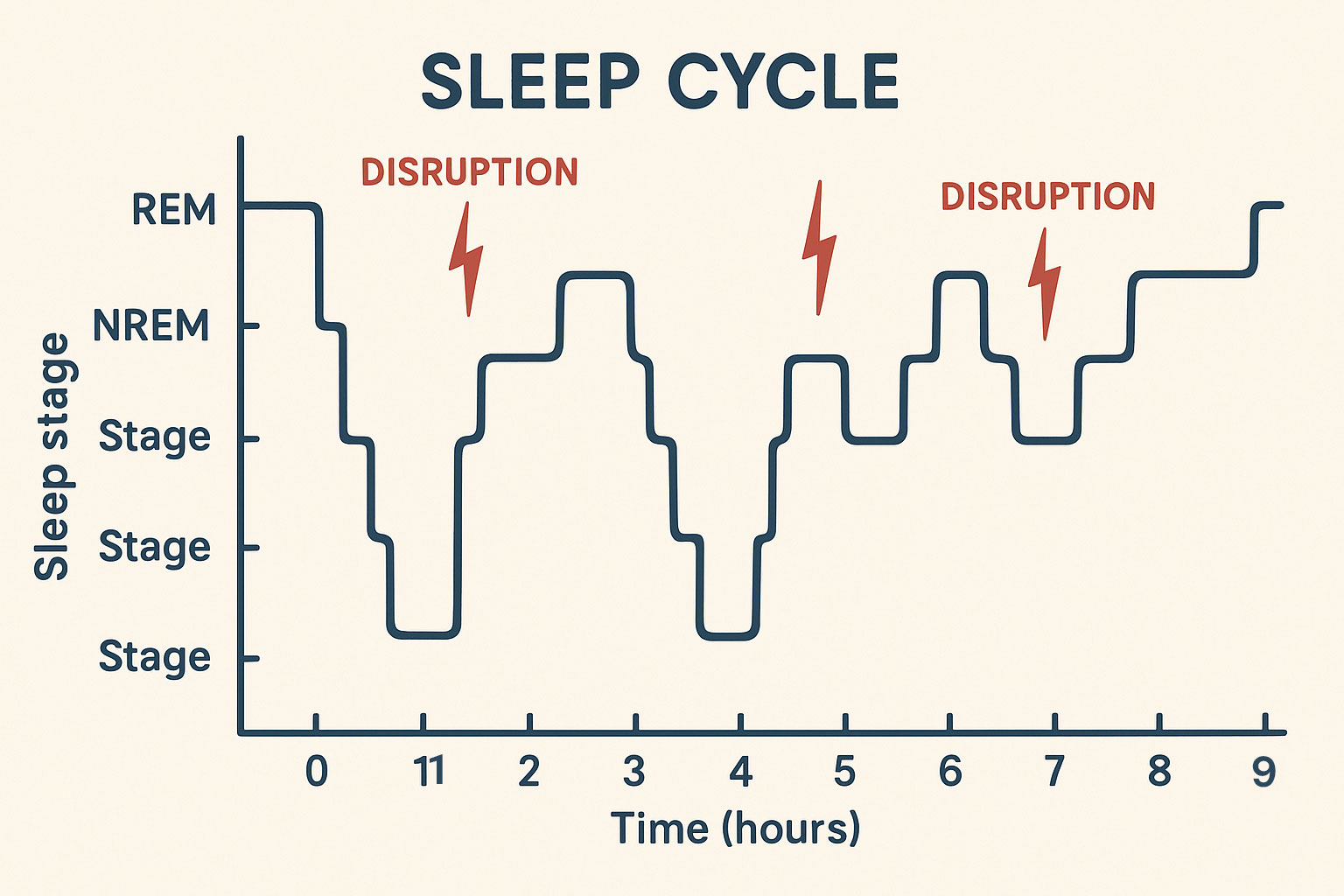
Precise Testing for an Often Overlooked Disorder
Because PLM occurs during sleep, it often goes undiagnosed. At Lakeland Sleep Center, we use advanced tools to capture and analyze your sleep movements.
Our diagnostic process includes:
lineComprehensive Sleep Evaluation – to understand your symptoms and sleep history.
- lineOvernight Sleep Study (Polysomnography):
- Measures leg movements, brain waves, oxygen levels, heart rate, and breathing
- Detects frequency and severity of limb movements
lineAdditional testing of PLM is found alongside other disorders like RLS or sleep apnea
Consultation

Evaluation

Diagnosis

Treatment Plan

Find Relief. Sleep More Peacefully.
PLM can be effectively managed with personalized treatment. Your plan may include:

Iron Supplements
If low iron is contributing to symptoms

Medications
Including dopamine agonists, anticonvulsants, or benzodiazepines—used with care to reduce movements and improve sleep quality

Sleep Hygiene Counseling
Creating healthier sleep routines to minimize disruptions

Treating Related Disorders
Such as sleep apnea or restless legs syndrome, which may be worsening symptoms
Don’t Let PLM Disrupt Your Nights Any Longer
If you’re always tired, or your bed partner notices constant leg twitching, it’s time for answers. Let our sleep specialists help.
Real Stories, Real Impact
This was a great experience! I was treated with kindness, respect, and every courtesy. Everything in my room and bath was immaculate. There was warmth and humor that let me relax. The 'hook up' was done with care and expertise. I am truly grateful for this service.
"Appreciate the sleep and bed…like home."
"I want you to know how much I have appreciated the great service and help that Ray Pietz has given me in the last month or so. I was very dissatisfied with the service I had received from the clinic that originally sold me and serviced my...
Read More"From now on I will look to him, and to your clinic, whenever I have need for help with my sleep apnea and CPAP"
"This company is doing a great job. The customer service is very good."
"It was a very pleasant experience in as private environment as possible. I was surprised how Eugene made me feel so comfortable and took the time to explain everything so well. Thank you."
"Your facility and employees are excellent."
"Shawn is outstanding! The best person I’ve ever had to be a patient for in all of health care. He’s knowledgeable, professional, caring. Makes it fun!"
"Techs were awesome and informative."
"Ann was AMAZING. She ALWAYS got back to me the same or next day. She answered ANY and ALL questions I had even if it meant playing phone tag. She really took the time with me and made me feel like I mattered. And what can top...
Read More"Excellent service/treatment. Felt well taken care of/cared for. I would highly recommend."
“The night of my sleep study I had Jenny she was very friendly. She knows what she is doing and does it with efficiency.”
"The night of my sleep study I had Caleb for a sleep tech and he was AMAZING and took his time with me and went over masks and everything with me."